
Published by Dating After 40 Guide
What makes a place useful for meeting people
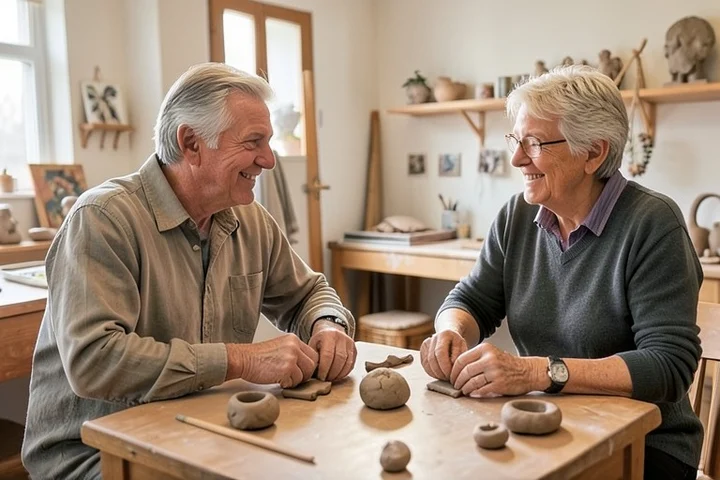
This exchange works because Maya starts with the shared activity, follows Daniel's actual answer, and then offers a specific next step. She is not opening with a demand for personal history or a vague line such as, "So, what do you do?" The walk gives them something concrete to discuss, and the repeated setting gives the conversation a natural second chance.
Look for four conditions when choosing where to meet singles after 40: people return regularly, the activity gives them something to talk about, the group has an approachable structure, and the trip fits ordinary life. A weekly class near home usually creates more opportunity than a large event that takes an hour to reach and ends after one evening.
Friend and acquaintance introductions add another route. Ask for a low-key introduction, not a guaranteed match. For example: "I am open to meeting someone new this year. If a friend comes to mind who enjoys conversation, live music, or weekend walks, feel free to introduce us. No matchmaking campaign required—I would simply appreciate an invitation or a group setting."
If the other person gives a short but engaged answer, continue once: "What made that stretch memorable?" If the reply stays closed—"Nothing much; I just came because my coworker asked"—exit comfortably: "Fair enough. I hope the rest of the event goes well." A pleasant ending preserves the setting for future conversations without forcing an exchange.
Choose a recurring activity route
Recurring activities create more openings because familiarity does part of the work. Consider a class with partner exercises, a walking or hiking club, a volunteer shift, a book discussion, a cooking group, a community choir, or an interest-based group organized for adults over 40. Shared tasks remove the need to invent an impressive opening line.
Compare the format before committing. A class that seats people in pairs or small groups supports conversation. A volunteer shift with a shared project gives you a practical reason to speak. A discussion group offers longer conversations but works best when the topic genuinely interests you. A large club where everyone arrives, performs the activity alone, and leaves immediately creates fewer openings.
Try language that names the activity and leaves room for an answer: "Have you taken this class before, or is tonight your first time?" "I am still figuring out the best way to do this part. How did you approach it?" "You mentioned coming here for the book discussion. What did you think of the ending?" "Would you be interested in joining the volunteer shift next Saturday? I am planning to come back."
The last line matters because it proposes another shared activity without turning one conversation into a declaration. Repeated attendance also helps distinguish genuine interest in the group from a single awkward exchange. Choose one or two settings you would keep attending even if romance never develops; that makes the routine sustainable and the conversations more natural.
Keep work relationships and community roles in view. At a workplace, avoid pursuing a person you supervise, evaluate, or depend on for professional access. At a volunteer organization, class, or neighborhood group, respect a clear no and keep future contact cordial. A shared community should remain comfortable for everyone who attends.
Trying one-time events strategically
One-time events include singles gatherings, neighborhood socials, fundraisers, lectures, and community celebrations. They bring more new faces into one room, but the format has to leave space for a second conversation. Before registering, check the likely age mix, group size, location, total cost, and schedule. Also ask how people interact: seated discussion and small-group activities usually create more openings than a crowded room organized around a performance.
A practical filter sounds like this: "Will I enjoy attending by myself? Can I speak with at least a few people without interrupting a private conversation? Is the event close enough for me to return to a related activity? Do participants exchange contact information or continue into another group?" If every answer is no, treat the event as a social outing, not your main route to meeting a partner.
At the event, use a specific observation: "Have you been to this neighborhood series before?" "What brought you to this volunteer fair?" "I heard you mention the next discussion group. What is the group like?" "I have enjoyed talking with you. Are you planning to attend the next gathering?"
That final question tests follow-up without demanding a personal invitation. If the person answers with a concrete plan, continue: "I am considering it too. Would you like to exchange numbers so we can remind each other?" If the answer is vague, say, "I may look it up later. Enjoy the rest of your evening," and return to the event.
Turning a promising encounter into a next conversation
Follow up while the shared subject remains fresh. Keep the invitation specific, easy to answer, and connected to what you already discussed.
One version: "You said you are trying more local walking routes. I am planning the Saturday trail near the park next weekend. Would you like to join me for that walk?" If the answer is positive, move to logistics: "Great. Does Saturday morning work, or would Sunday afternoon be better?"
Another version: "I enjoyed talking with you at the community class. You mentioned liking independent bookstores. Would you like to continue the conversation over coffee sometime next week?" If coffee is not appealing, leave room for another suggestion: "If coffee is not your thing, I would also be glad to attend the next class together."
These messages refer to real words from the earlier conversation, so they feel personal without pretending that a strong relationship already exists. One clear invitation is enough. A noncommittal reply such as "This month is hectic" does not call for repeated persuasion; answer, "No problem. If your schedule opens up, feel free to reach out," and continue using the group for its original purpose.
Use introductions without making them awkward
Jordan: I have been thinking about meeting more people outside my usual circles. If you know someone who enjoys live music and weekend walks, I would be open to an introduction.
Priya: I know a few people, but I do not want to create an uncomfortable blind date.
Jordan: That is exactly what I want to avoid. If it feels natural, invite both of us to a small gathering, or ask whether they would be comfortable with a brief introduction. If not, no worries.
Elena: I am open to meeting someone new. Would you feel comfortable mentioning me to your friends, or inviting me along when you get together with people who are single?
Marcus: I can think of someone, but I am not sure whether he is dating.
Elena: That is fine. Please do not ask him to date me. If you think we would get along, just let him know I would be glad to meet at a group event.
Friend: I know someone who is perfect for you. Send me your number and I will forward it.
You: I appreciate you thinking of me. Please ask whether they are interested before sharing my number, and let them choose whether to contact me.
Friend: That makes sense. I will check first.
You: I have enjoyed talking with you at the garden group. Would you like to continue the conversation over coffee sometime?
Other person: I would rather keep things within the group.
You: Thanks for being clear. I will see you at the next meeting.
You: I am enjoying the conversations at the community lecture series. Would you like to join me at next Thursday’s session?
Other person: I am not sure. I usually come with my sister.
You: No problem. I will be there anyway; if you would like to say hello afterward, I would enjoy that.