Published by Dating After 40 Guide
Choose the setting before choosing the activity
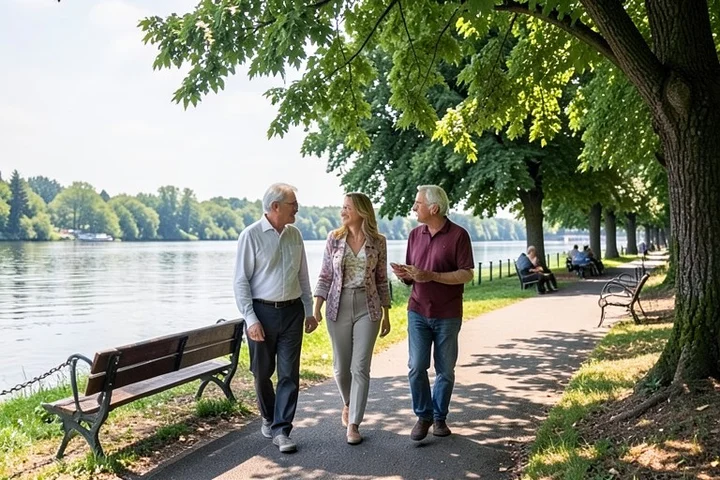
Choose a setting that keeps the activity manageable: a public place, reasonable travel, an apparent cost, and a natural finish. Conversation needs some space, but a few hours are unnecessary.
A café, a public park with nearby seating, or a casual daytime spot usually asks less of both people than a reservation, tickets, multiple stops, and a late finish. Choose a place that supports sitting, standing, or a shorter visit, and fit the plan to the energy you actually have that week.
Match the plan to the kind of first meeting
Match the amount of structure to how well you already know each other. Coffee suits a brief first meeting and a tight schedule. A walk adds movement and scenery. A casual meal gives the date more shape but takes longer. A bookstore, museum, market, or similar daytime outing supplies things to react to when you would rather not sit face-to-face the entire time.
For a low-cost first meeting, choose one short activity instead of stacking several paid stops together. When energy or mobility varies, make sitting the reliable part of the plan and treat walking or browsing as an optional addition.
Checking the plan before sending it
Before sending an invitation, make the activity, approximate location, duration, and weather or access backup clear to the recipient. One clear sentence often covers all four details.
- Weak Version: Let's meet at the café on Oak Street this Saturday at 2 p.m. for about 45 minutes. Revised Version: Let's meet at the café on Oak Street this Saturday at 2. I have about 45 minutes, and covered seating is available if the weather turns. Commentary: The weak version makes the other person invent the activity, place, time, and duration. The revised version gives one workable plan while leaving room for a change.
- Message: The forecast looks uncertain. Should we still plan the walk? Reply: Let's use the café beside the park at 2 p.m. A short walk afterward fits dry weather; rain means coffee inside. Follow Up: If the café is full, I will text you with the bakery across the street as the backup location. Commentary: A weather plan should name the default location and the backup. The backup stays nearby and does not create a second, complicated date.
- Message: I can meet, but I will be coming straight from work and have only half an hour. Reply: No problem. Let's do a quick coffee at 5:30 near your office. If traffic makes that difficult, 6 p.m. tomorrow at the same café also works for me. Commentary: The plan answers where, roughly when, how long, and what happens if timing changes. One alternate time is enough; several options start to feel like scheduling work.
Making the invitation easy to accept or decline
One concrete plan and one alternate time are enough. The strongest invitation does not ask someone to design the date for you, but it also leaves them space to say no, suggest a change, or offer another day.
I have enjoyed talking with you. Let's meet for coffee at the café on Pine Street this Sunday at 1 p.m. I have about an hour. If Sunday is busy, Tuesday at 5:30 also works for me.
Sunday works. Coffee sounds good.
Great. I will meet you by the front window at 1.
I would rather do something with a little movement than coffee.
How about a short walk through the public gardens on Sunday at 1? There are benches along the route, and the café by the entrance provides a seated option.
If the weather is poor, we can switch to coffee at that café instead.
Sunday does not work for me, and I am not sure about Tuesday either.
No problem. I will leave it there rather than keep scheduling. If you decide you would like to meet another time, you can let me know.
I am interested, but I do not want to commit to a long or expensive evening.
Then let's keep it easy: tea or coffee at the neighborhood café for 45 minutes on Wednesday at 6. If that time is inconvenient, Friday at 4 works too.