
Published by Dating After 40 Guide
Use the conversation, not the calendar, as the signal
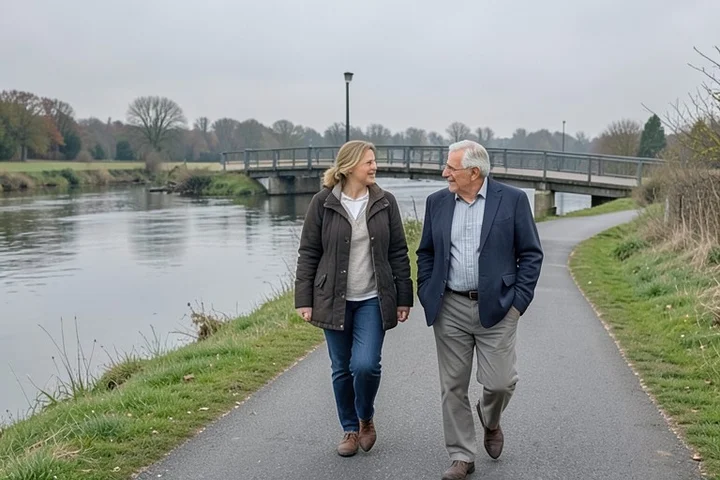
Messaging can establish modest things: whether someone responds with some consistency, shows interest in your answers, discusses work, family, interests, or relationship intentions with reasonable clarity, and handles a small difference in opinion without pressure or contempt.
It cannot confirm in-person chemistry, everyday reliability, or how either person handles an awkward pause. A warm chat may lead to an enjoyable meeting, or it may reveal that the connection worked better on a screen.
Do not wait for a magic number of messages. A few days of engaged, reciprocal conversation may be enough to suggest a short meeting. Several weeks of daily messages can create false familiarity: you may fill gaps with hopeful assumptions, imagine how the person will act in person, or feel attached before sharing ordinary physical space. Keep your judgment connected to what you actually know.
Maya: Your profile says you like weekend trips. What has been your favorite one lately?
Jon: I drove up the coast for three days. I had planned every stop, then ignored half the plan after finding a great trail.
Maya: Which part did you enjoy most?
Jon: What about you? What do you do when you get a free Saturday?
Maya: Usually a long walk, a farmers market, or lunch with a friend. I like having a plan with enough room for a change of mind.
Jon: That sounds familiar. Would you be interested in continuing this over coffee sometime?
Maya: I have enjoyed talking with you. I would be happy to meet, though my schedule is full this week.
Jon: No problem. I am free Sunday afternoon or Tuesday after six. Would either option suit you?
Maya: Sunday afternoon works. I can do 2:00.
Maya: I feel as if we have talked about everything, but we still have not made a plan.
Jon: I like our conversations. I am not ready to meet yet.
Maya: I understand. I am comfortable messaging for another week, then I will decide whether this pace works for me.
Maya: I liked hearing about the river walk. What made that stretch memorable? I have enjoyed talking with you, and I would be open to a short coffee if you are.
Jon: The trail was quiet, and I found a small café at the end. Coffee sounds good.
Maya: Great. Would Saturday morning work?
Move from messages to a specific invitation
Look at reciprocity in the actual exchange before inviting someone out. One-word replies, unanswered questions, and repeated topic changes leave you carrying the conversation. Detailed answers, follow-up questions, and willingness to discuss a possible day give you a reasonable opening.
Keep the first invitation small: coffee, a brief walk in a public place, or another short daytime meeting. You are checking whether an offline conversation deserves more time, not trying to settle the entire relationship through one date.
Before meeting, share only the personal information the plan requires. A general area, your availability, and a way to recognize you may be enough. You can arrange your own transportation and keep your home address private.
Maya: I have liked getting to know you here. Would you like to meet for coffee for about 45 minutes next week?
Jon: Yes, I would. Wednesday or Saturday works for me.
Maya: Saturday at 11 works. Let’s meet at the café near the library. I will confirm the day before.
Maya: I would enjoy meeting. I am available Tuesday after six or Sunday morning. Which is easier for you?
Jon: Sunday morning. I prefer a short first meeting too.
Maya: Great. Let’s choose 10:30. If your plans change, please tell me by Saturday evening.
Jon: What is your exact address? I can pick you up.
Maya: I do not share my home address before meeting. I will meet you at the café, and I will arrange my own transportation.
Jon: Of course. I respect that.
Maya: I can meet at the café near the library at 10:30 for about 45 minutes. I will get there on my own.
Jon: That works. I will see you there.
Maya: If either of us needs to cancel, let’s give the other person notice rather than leave them waiting.
When to pause, call, or stop
Suggest a defined video call: “Would you be open to a ten-minute call Sunday evening?” If the person refuses, proceed only if you still feel comfortable. If pressure continues, stop.
When the conversation has substance and the invitation receives a clear response, move offline within a reasonable window. When answers stay vague, plans keep disappearing, or your boundaries produce pressure, stop investing more messages. Messaging helps you decide whether a short meeting feels appropriate; it cannot substitute for finding out how the connection works in person.
Maya: I would like to meet, though I would feel better after a quick ten-minute video call. Would Sunday at 6 work?
Jon: I do not enjoy video calls. I would rather meet for coffee.
Maya: Thanks for telling me. I am going to wait until I feel ready to meet. If you change your mind about a short call, let me know.
Jon: I need to cancel tonight. Work became hectic.
Maya: I am sorry your day became difficult. Would you like to suggest another day?
Jon: I cannot say when I will be free. Let’s keep talking for now.
Maya: I am looking for someone who can make a basic plan. Since we have postponed twice and there is still no date, I am going to step back. I wish you well.
Jon: Wait, I have just been busy. We can figure it out later.
Maya: I understand that schedules get busy. I am still going to step back. Take care.
Jon: If you were really interested, you would give me your number and meet me tonight.
Maya: I decide when I share contact details and when I meet. Pressure is a reason for me to stop here.
Maya: I will not be continuing this conversation. Goodbye.